
CSRC/FDA Workshop: The Proarrhythmic Assessment of New Chemical Entities (NCEs)
Archival Context: This article serves as a digital record of the pivotal CSRC/FDA Workshop held in 2016. As cited in Therapeutic Innovation & Regulatory Science, this meeting focused on evolving regulatory paradigms for assessing the proarrhythmic risk of New Chemical Entities (NCEs), with a specific emphasis on leveraging early Phase I ECG data to replace late-stage Thorough QT (TQT) studies.
Executive Summary
The assessment of cardiac safety is a critical gatekeeper in the development of New Chemical Entities (NCEs). For years, the industry operated under the ICH E14 guideline, necessitating a dedicated “Thorough QT” (TQT) study in late-stage development. While effective, this approach is resource-intensive and often occurs too late to influence molecule design.
The 2016 CSRC/FDA Workshop marked a turning point. Regulators and industry leaders gathered to discuss a new paradigm: integrating robust pre-clinical screening with early Phase I ECG assessment. This shift allows developers to characterize proarrhythmic risk earlier, faster, and more mechanistically.
For modern drug discovery, this means that safety is no longer just a clinical concern—it is a chemical design parameter. The ability to “design out” liability requires access to high-quality chemical biology tools and reference libraries from the earliest stages of lead optimization.
Part I: The Shift to Early Phase I ECG Assessment
The primary focus of the workshop was evaluating whether intensive ECG monitoring during routine Phase I (First-in-Human) trials could serve as a definitive assessment of QT prolongation, effectively replacing the standalone TQT study.
Concentration-QTc (C-QTc) Modeling
The workshop highlighted that C-QTc modeling in Phase I is often more sensitive than the categorical analysis used in TQT studies.
- Methodology: By drawing high-precision ECGs at multiple timepoints matched with pharmacokinetic (PK) samples, researchers can construct a linear model of the drug’s effect on the QT interval.
- Requirement: This requires achieving high plasma exposures (supra-therapeutic levels) in healthy volunteers.
The Role of Assay Sensitivity
To prove that a Phase I study is capable of detecting a QT effect (if one exists), the FDA requires “Assay Sensitivity.”
- Positive Controls: In TQT studies, Moxifloxacin is used as a pharmacological positive control.
- Phase I Challenge: Giving Moxifloxacin to healthy volunteers in a complex Phase I design is difficult. Therefore, regulators are increasingly accepting “High Confidence” negative results backed by strong pre-clinical ion channel data.
Part II: The Pre-Clinical Foundation – Screening New Chemical Entities
Note: This section bridges the clinical topic to Selleckchem’s product line.
Dr. David Strauss and other FDA speakers emphasized that clinical safety waivers are contingent upon a “low risk” pre-clinical profile. This places immense pressure on the quality of in vitro safety assays.
1. Ion Channel Screening (hERG and Beyond)
Before an NCE enters Phase I, it must undergo rigorous screening against cardiac ion channels.
- hERG ($I_{Kr}$): The primary driver of QT prolongation.
- Cav1.2 and Nav1.5: Channels that can mitigate or exacerbate arrhythmia risk.
Tooling for Discovery: To generate this data, medicinal chemists utilize Ion Channel Inhibitor Libraries. By screening NCEs alongside known reference inhibitors (like Dofetilide or Verapamil), researchers can rank-order their candidates based on safety margins.
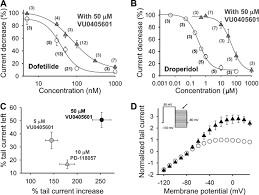
Figure 1. Representative hERG inhibition curves. The safety margin of a New Chemical Entity is determined by comparing its IC50 against high-purity reference standards.)
2. Chemical Liability and Structural Alerts
The workshop discussed how certain chemical substructures are prone to hERG binding.
- Discovery Strategy: Modern workflows involve screening Diversity Compound Libraries to identify scaffolds that lack these “structural alerts” while maintaining therapeutic potency.
Part III: The Role of Reference Standards in Validation
A recurring theme in regulatory science is “Validation.” How do we know the assay works?
Whether it is a cellular patch-clamp assay or a Stem Cell (hiPSC-CM) model, the system must be calibrated using Reference Compounds.
- Positive Controls: Drugs known to cause Torsades de Pointes (e.g., Sotalol, Quinidine).
- Negative Controls: Drugs known to be safe (e.g., Loratadine).
Sourcing Quality Reagents: The reliability of these validation studies depends entirely on the purity of the reference standards. Using a degraded or impure chemical probe can lead to false negatives, potentially allowing a dangerous NCE to proceed to clinical trials—a costly mistake that the 2016 workshop sought to prevent.
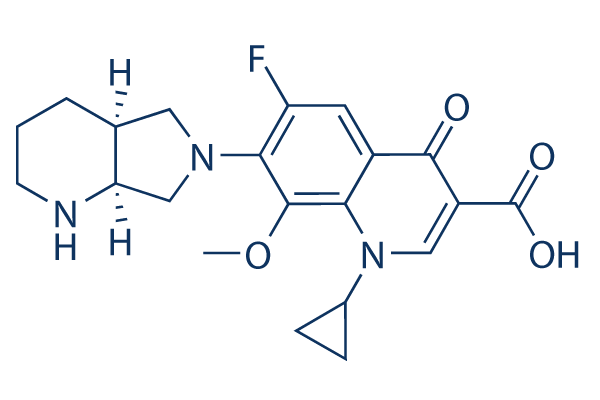
Figure 2. Chemical structure of Moxifloxacin. As the gold-standard positive control for assay sensitivity in QT assessment, high-purity Moxifloxacin is a critical reagent for validating both clinical and pre-clinical models.)
Part IV: Conclusion and Future Outlook
The 2016 CSRC/FDA Workshop codified the “Phase I ECG” pathway, later formalized in the ICH E14 S7B Q&A updates. For the pharmaceutical industry, this evolution underscores a simple truth: Safety starts at synthesis.
By leveraging comprehensive compound screening libraries and rigorous in vitro models during the discovery phase, developers can ensure that their New Chemical Entities are robust enough to withstand the scrutiny of early clinical assessment. The “fail early, fail cheap” mantra relies on the precision of the chemical tools used to define risk before the first human dose is ever administered.
References
- Strauss, D. G., et al. Comprehensive In Vitro Proarrhythmia Assay (CiPA) Update from a Cardiac Safety Research Consortium / Health and Environmental Sciences Institute / FDA Meeting. Therapeutic Innovation & Regulatory Science, 2019.
- ICH E14/S7B Implementation Working Group. ICH E14/S7B Questions and Answers, 2022.
- Darpo, B., et al. The IQ-CSRC Prospective Study: Can Early Phase 1 ECG Data Replace the Thorough QT Study? Annals of Noninvasive Electrocardiology, 2014.